
Key Takeaways
1. Most common car paint problems include fading, peeling, chips, and rust, which all worsen with time if they are not addressed.
2. The difference between a fixable problem and a full repaint often comes down to how quickly you act.
3. Badell’s Collision offers professional car painting and refinishing with digital color matching, I-CAR Gold Class certified technicians, and a lifetime warranty on all work. Two locations in Aston and Malvern serve drivers across Delaware and Chester Counties.
Why These 7 Car Paint Problems Should Not Be Ignored
Your car’s paint is not just cosmetic. It is the first line of defense against rust, corrosion, and structural damage. Underneath the color you see, there are multiple layers: primer, base coat, and clear coat. When any of these layers is compromised, moisture gets in, and the damage spreads.
What starts as a small chip or a dull patch can turn into peeling, rust, or full panel failure in a matter of months. Especially in Pennsylvania, where road salt, humidity, and temperature swings accelerate every form of paint damage.
Here are the seven most common car paint problems we see at our shops, what causes them, and what to do about each one.
1. Fading
Fading is the most gradual and most common paint problem. Your car slowly loses its vibrancy until the finish looks flat, dull, and washed out. The roof, hood, and trunk lid are usually the first areas to show it because they get the most direct sun exposure.
What causes it: UV rays break down the chemical bonds in the clear coat and base coat. Over years of exposure, the protective layers thin, and the pigment beneath loses its depth.
What to do: Mild fading can often be corrected with a professional polish and a fresh layer of wax or sealant. If the clear coat is still intact, the color underneath is usually salvageable. If the finish looks chalky or white in patches, the clear coat has failed, and the panel needs repainting.
Prevention: Wash and wax your car every three months. Park in a garage or shaded area when possible. A quality wax provides a UV barrier that slows the process significantly.
2. Clear Coat Peeling
This is fading’s more aggressive cousin. When the clear coat separates from the base coat, it flakes off in sheets or bubbles up in patches. Once it starts peeling, there is no way to polish it back. The panel needs to be stripped and repainted.
What causes it: Prolonged UV exposure, poor original paint application, moisture trapped between layers, or physical damage that breaks the seal. Road salt and winter conditions in Pennsylvania accelerate it.
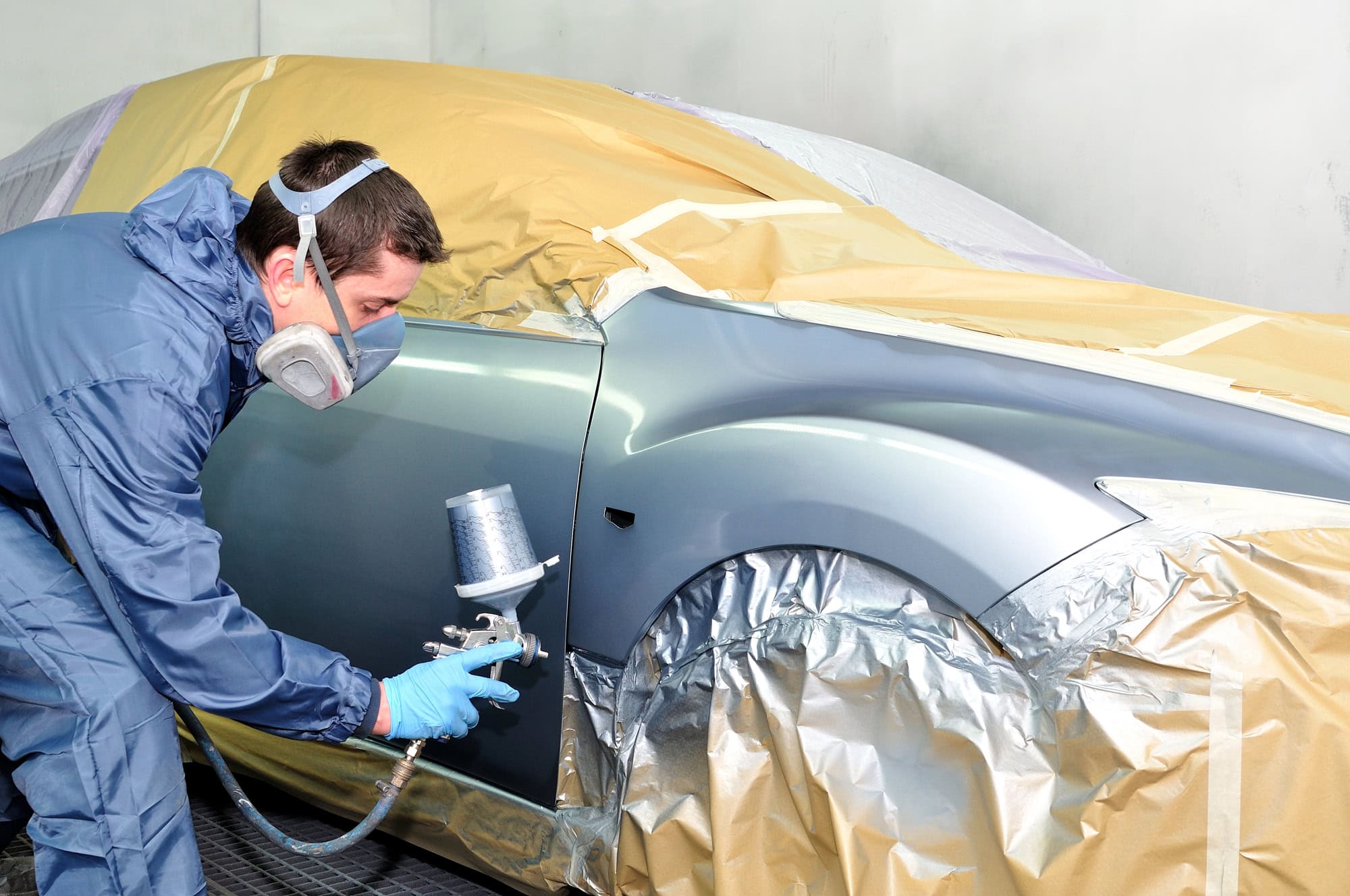
What to do: Take the car to a professional auto body shop. At Badell’s Collision, we strip the damaged clear coat, prep the surface, and reapply base coat and clear coat using digital color matching to ensure a seamless blend with the rest of the vehicle.
Prevention: Address chips and scratches immediately. Every break in the clear coat is a doorway for UV and moisture to reach the layers underneath.
3. Scratches
Scratches range from light surface marks that only affect the clear coat to deep gouges that cut through to the primer or bare metal. The depth determines whether the fix is a quick buff or a full repaint.
What causes it: Road debris, parking lot dings, automatic car washes with stiff brushes, improper washing technique (using household cleaners or rough sponges), keys, and shopping carts.
How to tell the depth:
- Clear coat scratch: You can feel it with your fingernail, but it does not catch. A polish or rubbing compound can usually remove it.
- Base coat scratch: You can see the color change or a white line. This needs touch-up paint or professional repair.
- Primer or metal scratch: Bare metal or grey primer is visible. This must be repaired immediately to prevent rust.
Prevention: Hand wash with pH-neutral car soap and microfiber towels. Avoid automatic car washes with spinning brushes.

4. Rock Chips
Every driver deals with rock chips eventually. Small stones kicked up by other vehicles impact the front bumper, hood, and fenders. Each chip removes a tiny piece of clear coat and paint, exposing the layers underneath.
What causes it: Highway driving, construction zones, gravel roads, and following other vehicles too closely.
What to do: Small chips can be filled with touch-up paint from your dealer or a matched paint pen. For larger or numerous chips, professional repair produces a cleaner result. If chips have been left untreated and rust is forming, the area needs to be sanded, treated, and repainted.
If you need an estimate, Badell’s Collision offers photo estimates so you can get a quote before visiting the shop.
5. Oxidation
Oxidation is the chemical reaction between oxygen and the paint surface. It happens naturally over time, but UV exposure, heat, and neglect speed it up. The result is a hazy, chalky, dull finish that no amount of washing will fix.
What causes it: Sun exposure, lack of wax or sealant, age, and environmental contaminants like acid rain, bird droppings, and tree sap.
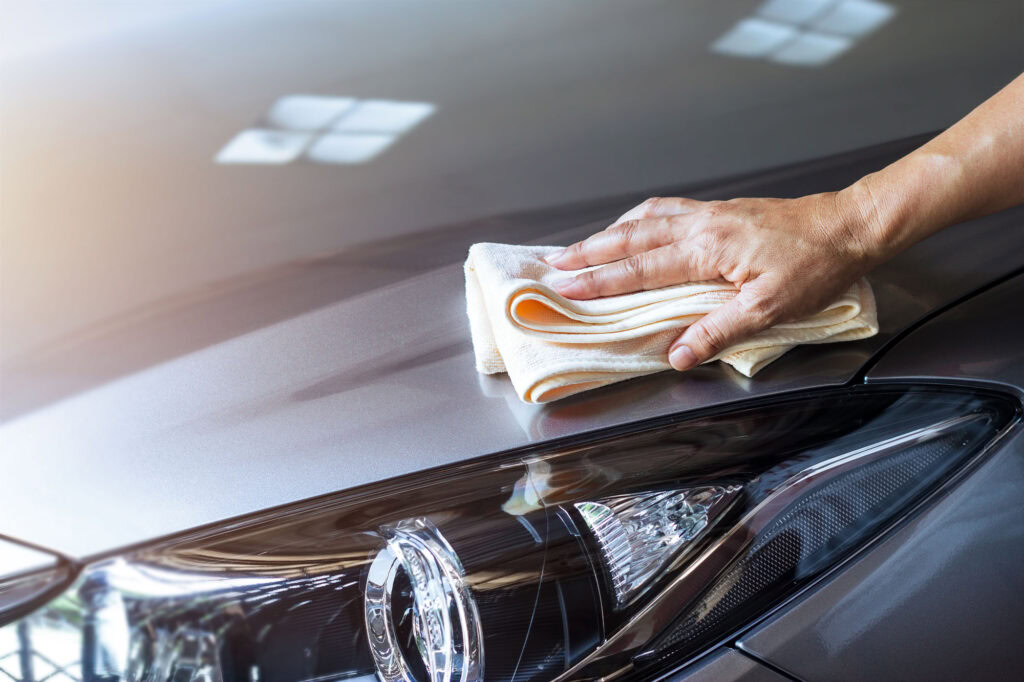
What to do: Light to moderate oxidation can be corrected with machine polishing. The polishing compound removes the dead, oxidized layer and exposes fresh paint underneath. A sealant or ceramic coating is then applied to protect the restored surface.
If the oxidation has progressed to the point where the clear coat is white, rough, or flaking, the panel needs professional repainting. There is no DIY fix for clear coat failure.
6. Rust
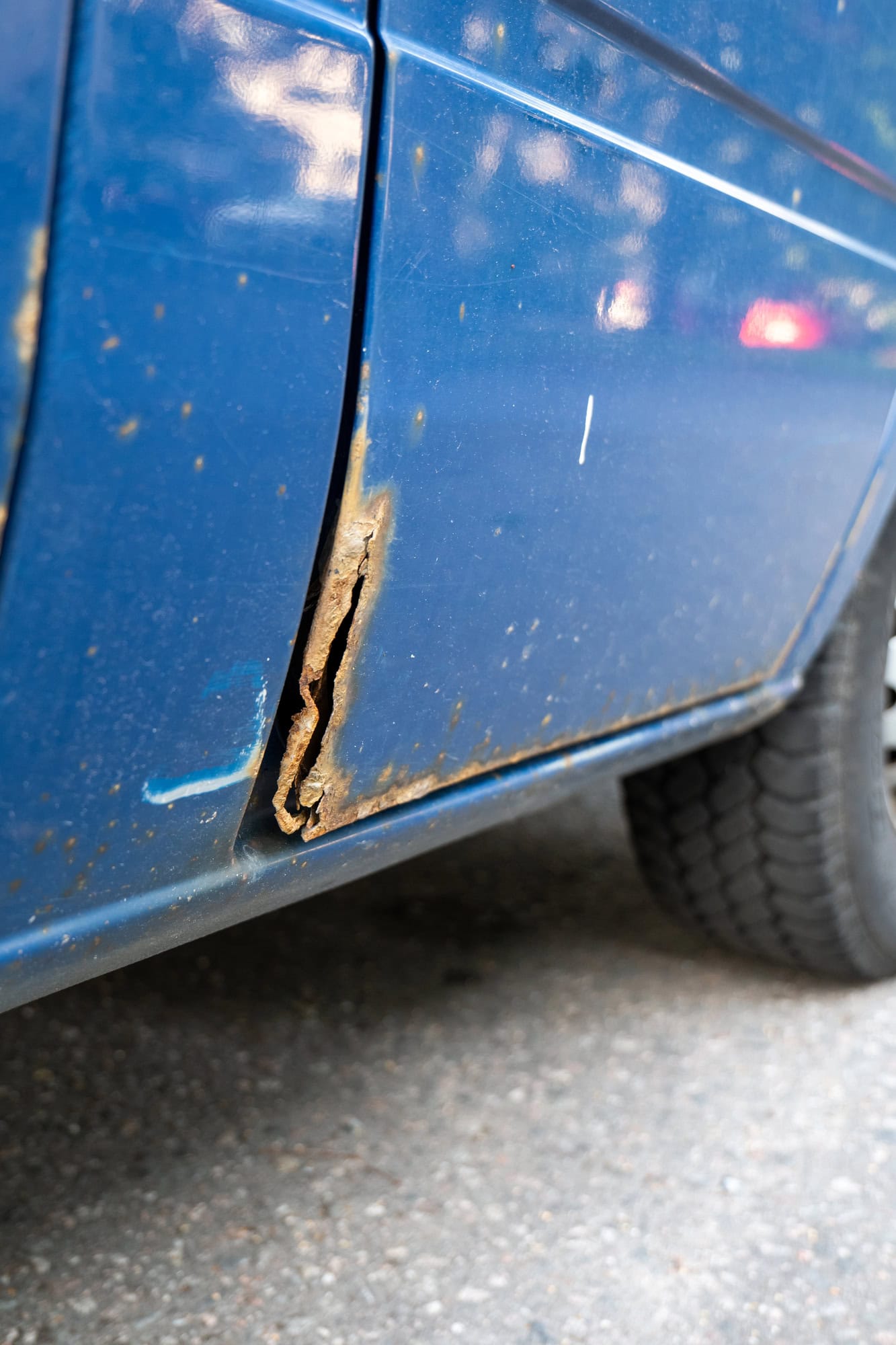
Rust is what happens when paint damage goes untreated. Once moisture reaches bare metal through a chip, scratch, or crack in the clear coat, oxidation of the metal begins. It starts as a small bubble or brown spot and spreads underneath the paint from the inside out.
What causes it: Untreated chips and scratches, road salt, moisture, and winter driving conditions. Pennsylvania’s combination of salt, slush, and freeze-thaw cycles makes rust a persistent problem.
What to do: Surface rust can be sanded, treated with a rust converter, primed, and repainted. If the rust has eaten through the metal panel, the damaged section may need to be cut out and replaced. This is a job for a professional body shop.
Prevention: Fix chips and scratches quickly. Wash your car regularly during winter to remove road salt. Pay special attention to wheel wells, rocker panels, and door edges where salt and moisture collect. For more on how insurance covers this type of damage, see our guide on the difference between comprehensive and collision auto insurance.
7. Water Spots and Etching
Water spots look minor, but left untreated, they can permanently etch into the clear coat. Hard water, sprinkler systems, and acid rain leave mineral deposits on the surface. In direct sunlight, the water evaporates, and the minerals bake into the finish.
What causes it: Hard water from sprinklers, rain mixed with pollutants, car washes that do not dry the vehicle properly, and water left sitting on a hot surface.
What to do: Fresh water spots can usually be removed with a vinegar-water solution or a dedicated water spot remover. Etched spots that have penetrated the clear coat may need machine polishing or wet sanding by a professional.
Prevention: Dry your car after every wash. Do not let water sit on the surface in direct sunlight. If your home has hard water, avoid washing the car with a garden hose unless you dry it immediately.

Common Car Paint Problems And Solutions From Experts
DIY Fix vs. Professional Repair
Not every paint problem needs a body shop. Here is a quick guide.
| Problem | DIY Possible? | When to Call a Professional |
|---|---|---|
| Light fading | Yes, with polish and wax | If clear coat has failed |
| Clear coat peeling | No | Always. Requires strip and repaint. |
| Clear coat scratch | Yes, with rubbing compound | If scratch reaches base coat or metal |
| Rock chips (small) | Yes, with touch-up paint | If rust has formed or chips are widespread |
| Light oxidation | Yes, with machine polishing | If finish is chalky or flaking |
| Rust | No for anything beyond surface rust | Always for bubbling or through-metal rust |
| Water spots | Yes, if caught early | If etching has penetrated the clear coat |
What You Should Do Next
Paint problems do not fix themselves. They get worse. The sooner you act, the less it costs and the better the result.
- Inspect your car’s paint today. Walk around the vehicle in direct sunlight. Look for chips, dull spots, peeling, and any brown discoloration near edges and seams.
- Address small damage immediately. A $15 touch-up pen today prevents a $500 rust repair next year.
- Bring it to Badell’s Collision for anything beyond surface-level. We handle everything from single-panel refinishing to full-vehicle repaints. Every job uses digital color matching, factory-quality materials, and comes with a lifetime warranty. Call Aston at (610) 494-2200 or Malvern at (610) 644-1655.
FAQs