Key Takeaways
1. Car insurance covers hail damage only if your policy includes comprehensive coverage. Liability and collision coverage don’t pay for it.
2. In Pennsylvania, insurers can’t surcharge a paid comprehensive claim, so filing carries no penalty. We recommend filing even if your first estimate falls below your deductible, because hail repair costs usually rise once the work begins.
3. Badell’s Collision repairs hail damage with paintless dent repair and factory-quality bodywork, coordinates with your insurer, and backs its repairs with a lifetime warranty.
Does Car Insurance Cover Hail Damage?
Yes, car insurance covers hail damage if your policy includes comprehensive coverage. If you only carry the liability coverage Pennsylvania requires, you pay the repair bill yourself.
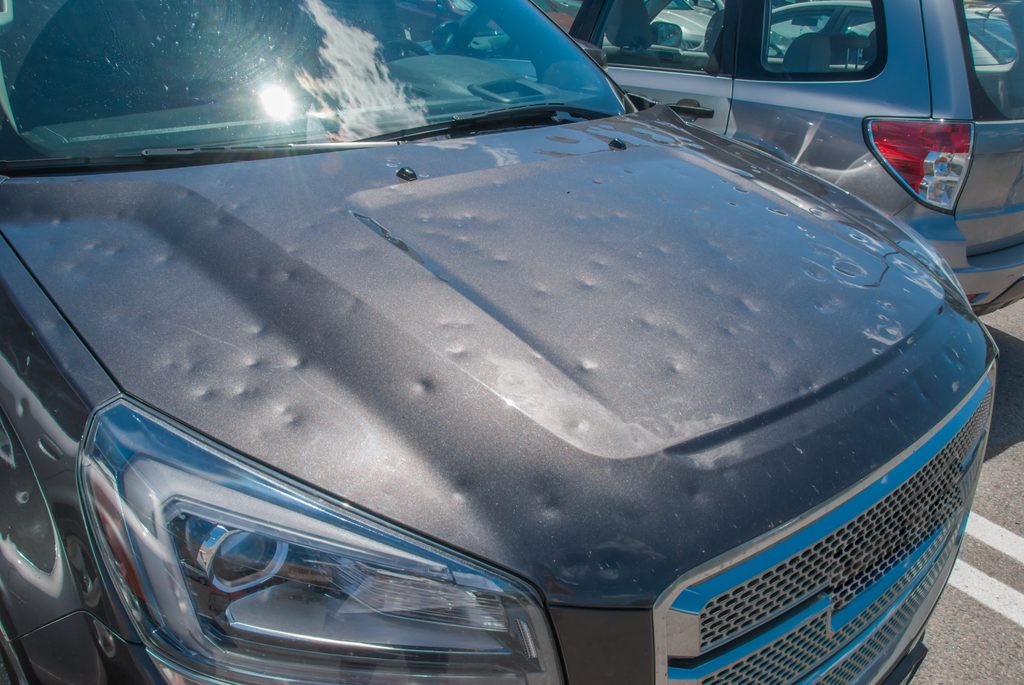
One hailstorm can leave dozens of dents across a single hood and roof. Here’s which coverage pays, when a claim is worth filing, and how to get the car fixed properly once it’s approved.
1. Why Hail Damage Counts as a Comprehensive Claim
Insurers sometimes call comprehensive “other than collision” coverage. It pays when something besides a crash damages your car, such as falling objects, fire, theft, vandalism, animals and severe weather.
Hail fits that definition because your car didn’t hit anything. The storm did the damage, so collision coverage doesn’t apply.
If you finance or lease your car, your lender usually requires comprehensive coverage. If you own an older car outright, check that you didn’t drop it to save on premiums.
2. Does Liability Insurance Cover Hail Damage?
No. Liability insurance pays for injuries and property damage you cause to other people, not damage to your own car.
Pennsylvania’s minimum policy is $15,000 per person and $30,000 per accident in bodily injury liability, $5,000 in property damage liability, and $5,000 in first-party medical benefits. None of it pays to fix hail dents, which is why liability insurance doesn’t cover hail damage on its own.
3. Does Full Coverage Cover Hail Damage?
Usually, yes. “Full coverage” isn’t an official policy type. It’s shorthand for liability, collision, and comprehensive together, and the comprehensive piece is what pays for hail.
Because the term means different things to different people, check your declarations page. Look for the word “comprehensive” and the deductible listed beside it.
4. Does Comprehensive Insurance Cover Hail Damage to Glass and Lights?
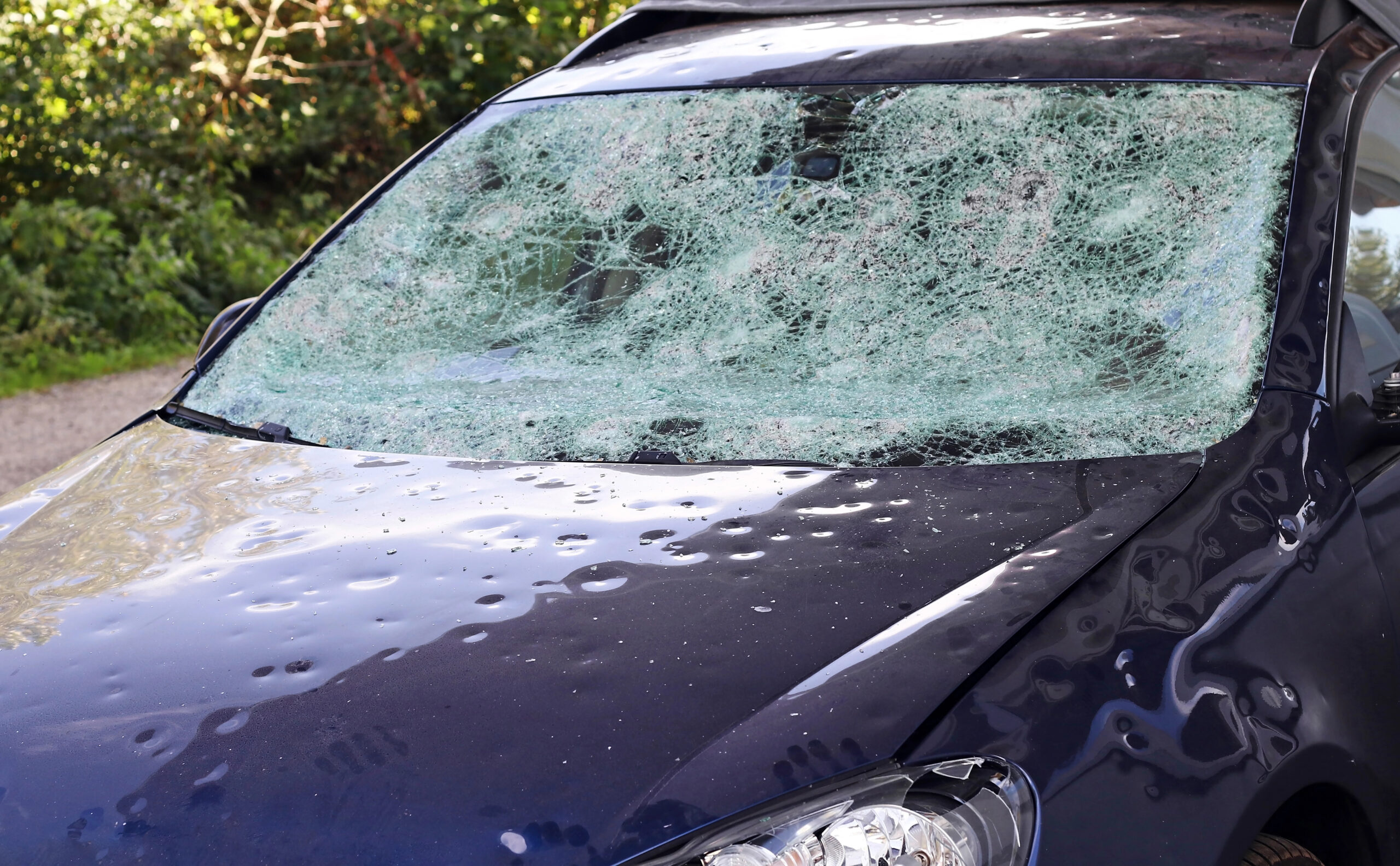
Yes. A cracked windshield, shattered sunroof, broken mirror, or smashed headlight from hail is a comprehensive loss, just like the dents.
Some insurers also offer separate glass coverage with a lower deductible. If only your windshield is damaged, that option can save you money.
| Coverage type | What it pays for | Covers hail damage to your car? |
|---|---|---|
| Liability | Injuries and property damage you cause to others | No |
| Collision | Your car after it hits another vehicle or an object | No |
| Comprehensive | Your car after non-crash events like weather, theft, fire, and animals | Yes |
| “Full coverage” | Usually liability, collision and comprehensive combined | Yes, through comprehensive |
If you’re unsure which one you carry, the difference between comprehensive and collision auto insurance comes down to what caused the damage.
Should You File a Hail Damage Insurance Claim or Pay Out of Pocket?
We recommend filing through your insurance, even when the first estimate comes in below your deductible. Initial estimates are often written in poor lighting, and that is when hail damage is easiest to miss. Most hail claims we see end up with supplements that raise the final cost.
Compare Your Repair Estimate to Your Comprehensive Deductible
Comprehensive deductibles typically range from $100 to $2,500, depending on the policy you chose. You pay the deductible, and the insurer pays the remaining approved repair cost.
Here’s how the numbers work with a $500 deductible:
| Initial estimate | You pay | Insurer pays | Likely outcome |
|---|---|---|---|
| $400 | $400 | $0 | Nothing is paid yet, but supplements may push it past your deductible |
| $750 | $500 | $250 | A small payout that often grows |
| $3,000 | $500 | $2,500 | A clear claim |
Older cars need one more check. If your car is worth less than about double your deductible, a claim may pay little even after supplements, because the payout is capped at the car’s value minus the deductible. A car worth $1,800 with a $1,000 deductible can’t pay out more than $800.
Treat your first estimate as a starting point, not the final number. A photo estimate shows whether you’re in the range worth pursuing.

Honest estimates, guaranteed workmanship, family-owned since 2003.
Why a low first estimate often changes
Hail damage hides in flat or overcast light. Once a technician takes the car apart and inspects it under proper lighting, more dents usually turn up. The shop then sends your insurer a supplement for the added damage.
Today’s vehicles add another cost. Removing panels and parts can trigger calibrations of advanced driver-assistance systems (ADAS), and those are never cheap.
An estimate below your deductible can still end up above it by the time repairs are done. Filing a comprehensive claim carries no penalty, so you lose nothing by reporting it.
Does a Hail Damage Claim Raise Your Rates in Pennsylvania?
A hail claim isn’t counted as at fault, because hail is an Act of God, not a driving mistake. Under 31 Pa. Code § 67.33, Pennsylvania insurers can’t add a premium surcharge for a claim paid under the comprehensive part of your policy unless you caused the loss on purpose.
That is one more reason we suggest filing. You aren’t penalized for reporting a comprehensive claim.
That rule blocks surcharges tied to your claim, but it doesn’t freeze your premium. Insurers can still raise base rates across a whole region after costly storm seasons, so your renewal price may change for reasons that have nothing to do with you.
How Do You File a Hail Damage Insurance Claim?
Report the damage quickly, back it up with photos and an estimate, and choose a shop you trust for the repair. Here’s the best order for a car hail damage insurance claim.
- Document the damage. Photograph every panel in daylight, plus a few wide shots of the whole car. Dents show up best when light hits the panel at an angle. Write down the storm’s date and time, and save a local news report or National Weather Service storm report if you can find one.
- Get a repair estimate. An estimate gives you a number to compare with the adjuster’s. You can request an online estimate from Badell’s in a few minutes.
- Call your insurer promptly. Have your policy number, the storm date, where the car was parked, and your photos ready. Ask right away whether your policy includes towing and rental coverage.
- Meet the adjuster. Be there for the inspection if you can. Point out every damaged area, including the roof, trim, moldings, and glass, and ask for a copy of the adjuster’s estimate.
- Choose your repair shop. Your insurer may recommend a shop from its network, but you can ask to have the work done at a shop you trust. If the shop finds damage the adjuster missed, it sends the insurer a supplement, which is key to getting insurance to pay for car repair in full.
Towing and Rental Coverage After a Hailstorm
Don’t drive a car with broken or cracked windows after a severe storm. Damaged glass can shatter, and you can’t see well through it.
Towing isn’t part of comprehensive coverage itself. It’s paid only if your policy includes roadside assistance or towing coverage.
Full rental coverage usually requires rental reimbursement, though some policies include a small daily transportation allowance after a covered loss. Check your declarations page and compare your rental car insurance options before storm season.
Badell’s partners with Enterprise Rent-A-Car, so you can arrange a rental when you drop off your car.
How Do Insurance Adjusters Assess Hail Damage on a Car?
Adjusters count and size the dents on each panel, then decide whether each panel can be repaired or has to be replaced. Those panel-by-panel findings drive the whole estimate.
- Dent count: The hood, roof, and trunk lid usually take the most hits, so they get the closest look.
- Dent size: Small, shallow dings cost less to fix than large, deep dents with sharp edges.
- Panel material: Aluminum panels are harder to straighten than steel, which raises repair costs.
- Paint condition: If the paint is cracked or chipped, that panel needs conventional bodywork and refinishing instead of paintless repair.
- Glass, lights, and trim: These are inspected and priced separately from the body panels.
Hail dents are easy to miss in flat or overcast light. Most initial hail estimates need supplements once the car is under proper lighting and partly disassembled. That is why it helps to have your car inspected in good light before the adjuster’s visit.
How Much Does Insurance Pay for Hail Damage?
Insurance pays the approved repair cost minus your deductible. At most, it will pay your car’s actual cash value (ACV), minus that same deductible.
ACV is what the car was worth right before the storm, based on its age, mileage, and condition. Say the adjuster approves $4,000 in repairs and your comprehensive deductible is $500. The insurer pays $3,500, and you cover the first $500.
The Insurance Information Institute puts the average hail repair at about $2,500, though a heavily dented roof or aluminum panels can push a bill well past that. Discussing the rise in hail claims, Mark Friedlander of the Insurance Information Institute noted that insurers “are paying hail claims based on the coverage as defined in the policy.” Your auto policy works the same way, so its wording decides what gets paid.
Costs vary widely. One hailstorm can leave no damage at all, while another can run into the tens of thousands of dollars. The vehicle and its technology drive much of that difference. Dent count and size, panel material, and paint condition then decide where a repair lands, as covered above.
If you finance or lease the car, the check may be made out to both you and your lender.
Can Hail Damage Total a Car?
Yes, but Pennsylvania doesn’t set a percentage of pre-loss value that makes a car a total loss. Each insurer uses its own guideline, and reaching it triggers a total loss evaluation.
The estimating platform we use, CCC ONE, includes a basic ACV calculator that flags a car at a preset percentage. The calculator can’t account for your car’s condition. Say a car comes in for front-end damage and the repair cost is close to its ACV. If it also has several hundred dollars of prior unrepaired damage, that can be enough to tip it into a total loss.
Older cars are the most likely to be totaled because their value is low to begin with. Leaving hail damage unrepaired can also contribute to a total loss after a later accident, because the insurer counts the old damage along with the new. A totaled car may also come back with a salvage title, so understand your settlement before you accept it.
How Long Do You Have to File a Hail Damage Claim?
Most auto policies require prompt notice of a loss, not a fixed number of days. In practice, report hail damage within a few days of the storm.
Your exact obligations are in the “duties after an accident or loss” section of your policy, so read it before you assume you have time. Don’t confuse this with Pennsylvania’s lawsuit deadlines. Those limit how long you have to sue, not how long you can wait to report damage to your insurer.
Why Waiting Can Get Your Hail Claim Denied
It’s tempting to put off cosmetic repairs when the car still drives fine. The longer you wait, though, the harder the claim is to prove.
- The storm link fades: Weeks later, it’s harder to show the dents came from a specific storm.
- New damage mixes in: A second storm or parking-lot dings can blur which damage belongs to which event.
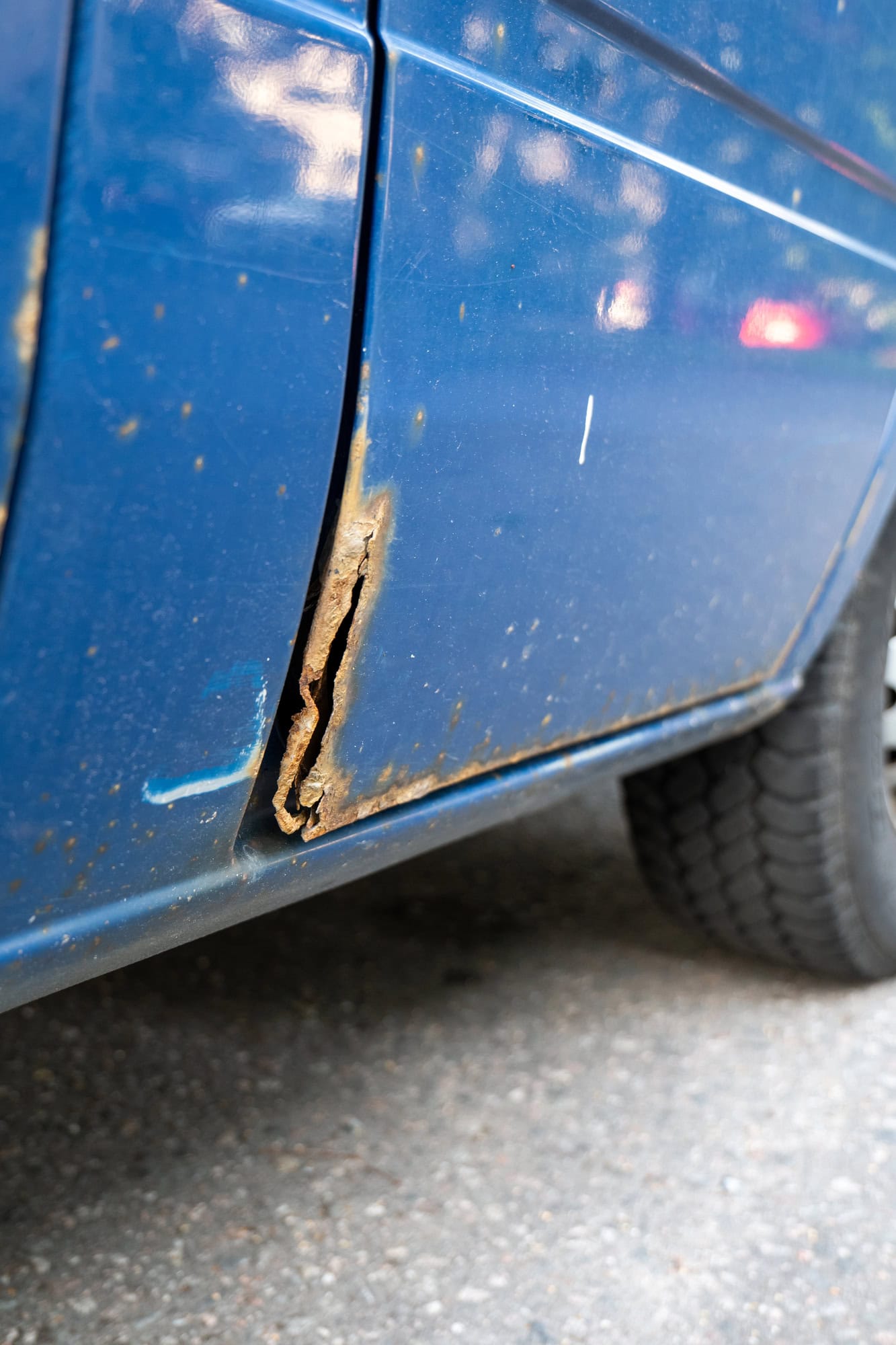
- Small chips turn into rust: Exposed metal can start to corrode, and an insurer may treat that as neglect instead of hail damage. Our guide to common car paint problems shows what to watch for.
- Repair queues grow: After a big storm, adjusters and shops book up fast, so an early claim usually means an earlier repair.
Even with plenty of documentation, a delay gives the insurer room to question the claim. Report it first and sort out the repair schedule afterward.
What to Do if Your Hail Damage Claim Is Denied
Start by asking for the denial in writing, with the policy language it relies on. Most hail claim denials come down to coverage, timing, or a disagreement over which damage the storm caused.
Common reasons a hail claim is denied:
- The policy doesn’t include comprehensive coverage.
- You reported the damage too late to verify it.
- The storm happened before the policy started or during a coverage lapse.
- The insurer believes some dents came from an earlier event.
- The approved repair cost falls below the deductible.
If you think the decision is wrong, you can appeal it by working through these steps in order:
- Review the written explanation against your declarations page and policy.
- Get an independent repair estimate from a body shop.
- Ask the insurer for a reinspection, and submit the new estimate and your photos.
- Check whether your policy has an appraisal clause for disputes over the amount of a loss.
- File a complaint with the Pennsylvania Insurance Department if you still can’t resolve it.
Keep copies of everything you send, and note the date and name of everyone you speak with at the insurance company.
What Is the Difference Between Paintless Dent Repair and Traditional Bodywork?
Most hail damage is repairable. The method depends on how deep the dents are, whether the paint is intact, and whether a technician can reach the back of the panel.
| Paintless dent repair | Traditional bodywork | |
|---|---|---|
| Best for | Shallow to moderate dents | Deep dents, sharp creases and heavily damaged panels |
| Paint condition | Paint must be intact | Paint is cracked or chipped |
| Factory finish | Kept | Panel is refinished to match |
| Repair time | Usually shorter | Usually longer, because of paint and cure time |
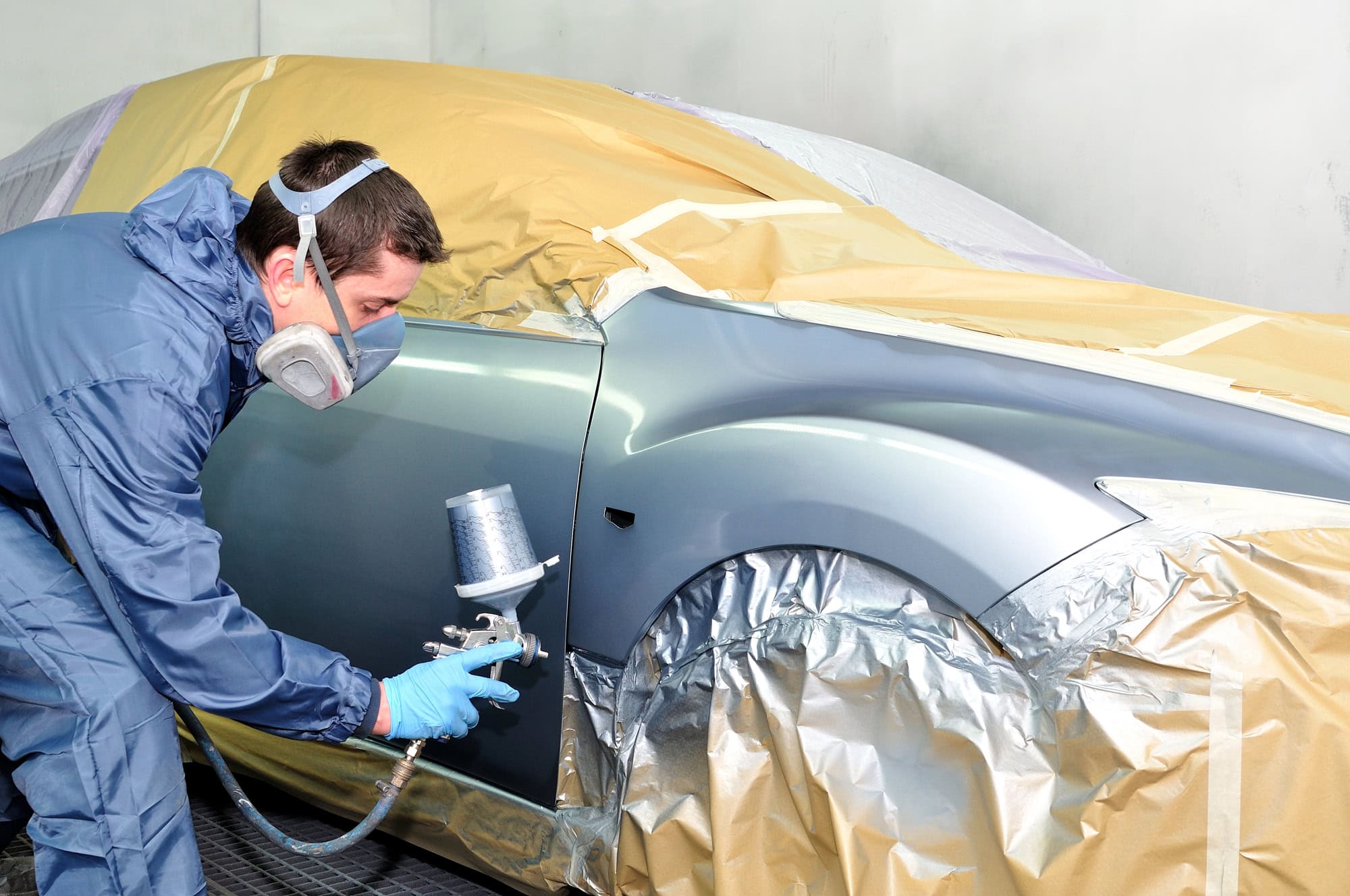
Many hail-damaged cars need both, with paintless dent repair on most panels and bodywork only where the paint broke. To see which method your car needs, get a free online estimate from the Badell’s hail damage repair team.
Get Your Hail-Damaged Car Assessed at Badell’s Collision Before You File
Hail damage is easy to underestimate. Until a technician inspects the car in good light, you’re guessing about the repair cost, your payout, and whether the car could be totaled.
Getting the damage inspected before you call your insurer means you know what to expect during the adjuster’s visit.
What you should do next:
- Inspect your car. Check every panel, the glass, and the trim in daylight, and photograph the damage before anything else happens to the car.
- File the claim. Report it promptly, even if your first estimate looks like it’s below your deductible. Supplements and ADAS calibrations often raise the final cost, and filing carries no penalty.
- Contact Badell’s Collision. Have a team that repairs hail damage and works with insurers every day inspect the damage.
Badell’s Collision has served Delaware and Chester County drivers for more than 20 years, with I-CAR Gold Class trained technicians and a lifetime warranty on its repairs. Request a free estimate online, or bring your car to Badell’s in Aston or Malvern to get started.
FAQs