Key Takeaways
1. Pennsylvania requires all drivers to carry at least 15/30/5 liability coverage plus $5,000 in first-party medical benefits.
2. Pennsylvania is a choice no-fault state. You pick between full tort and limited tort coverage.
3. When an accident happens, Badell’s Collision works directly with your insurance company to coordinate repairs, handle estimates, and get your car back on the road. Two locations in Aston and Malvern serve drivers across Delaware and Chester Counties.
What Are the Pennsylvania Auto Insurance Requirements?
Pennsylvania law requires every registered vehicle to carry minimum liability insurance. This is called maintaining financial responsibility under 75 Pa. C.S. Section 1702. If you drive without it, you face real consequences.
Here are the minimum coverage amounts every Pennsylvania driver must carry:
| Coverage Type | Minimum Required | What It Covers |
|---|---|---|
| Bodily injury liability (per person) | $15,000 | First-party medical benefits |
| Bodily injury liability (per accident) | $30,000 | Total medical costs for all people injured in one accident |
| Property damage liability | $5,000 | Damage to another person’s vehicle or property |
| First party medical benefits | $5,000 | Your own medical expenses, regardless of who caused the accident |
This is commonly written as 15/30/5. These are the legal minimums. They are not recommendations.
Why the Minimums May Not Be Enough
The minimum coverage amounts in Pennsylvania are among the lowest in the country. A single trip to the emergency room can exceed $15,000. A totaled vehicle can easily surpass $5,000 in property damage. If the costs exceed your coverage limits, you are personally responsible for the difference.
Consider what a typical accident actually costs. An ambulance ride, an ER visit, imaging, and follow-up care can reach $30,000 to $50,000 for one person. A newer vehicle can cost $35,000 to replace. Your $5,000 property damage limit would not come close.
We see this play out in our shops. A driver rear-ends a newer SUV in a parking lot. The bumper, sensors, and paint repair alone cost $6,000 to $8,000. If the at-fault driver only carries $5,000 in property damage coverage, they owe the rest out of pocket.
Many insurance professionals recommend at least 100/300/100 coverage for drivers who want meaningful protection. The cost difference between minimum and higher limits is often only $20 to $40 per month. Talk to your insurance agent about what makes sense for your situation.
Full Tort vs. Limited Tort: What Pennsylvania Drivers Must Choose
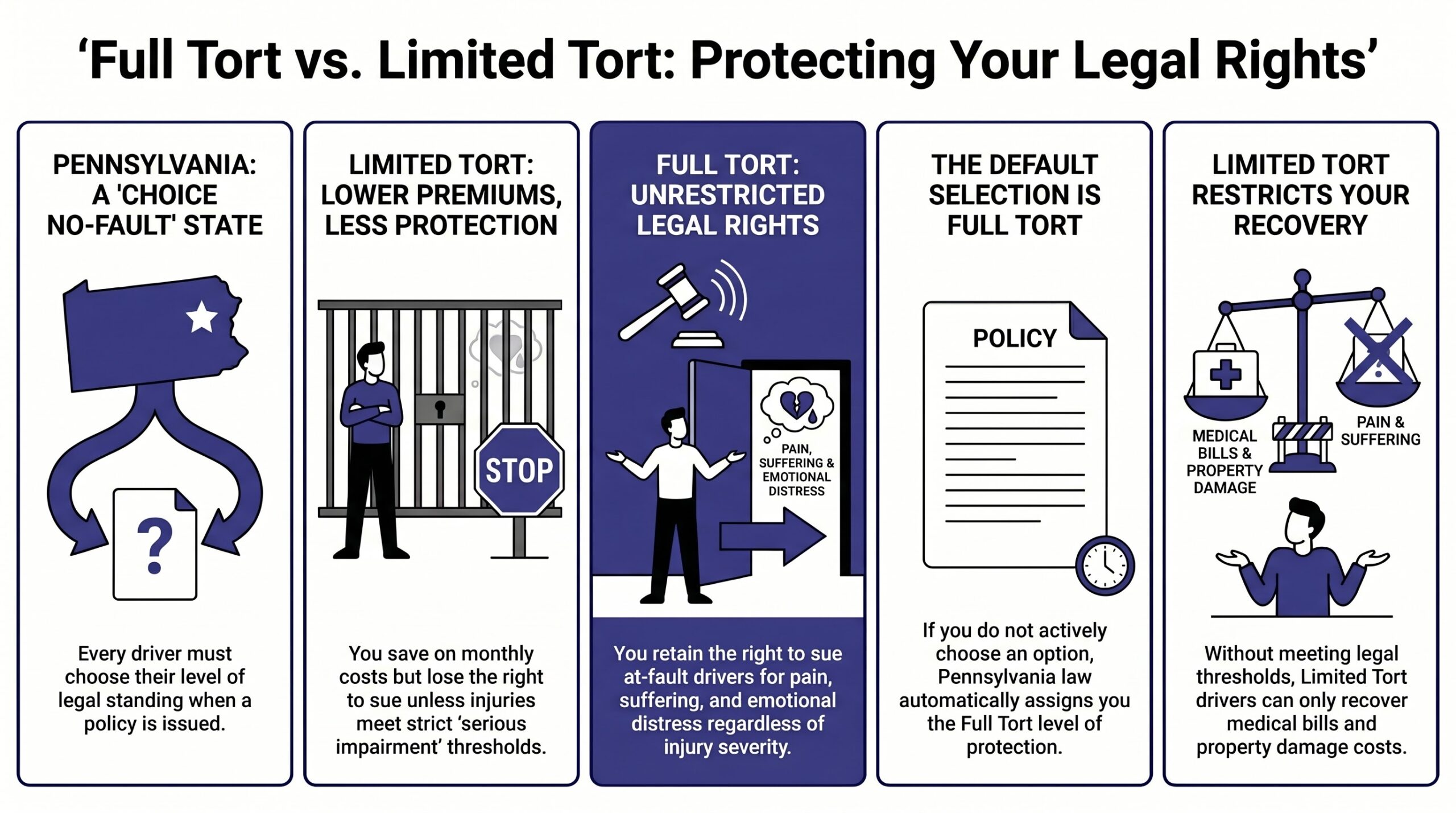
Pennsylvania is one of the few states that gives drivers a choice between two tort options. This choice directly affects your legal rights after an accident.
Full Tort
You keep the unrestricted right to sue an at-fault driver for pain and suffering, emotional distress, and other non-economic damages. There is no injury threshold you have to meet. If you are hurt, you can pursue compensation.
Full tort costs more. But it gives you the most legal protection if you are seriously injured in an accident.
Limited Tort
You give up the right to sue for pain and suffering unless your injuries meet specific legal thresholds. These include death, serious impairment of a body function, or permanent serious disfigurement.
Limited tort costs less. But if you are injured and your case does not meet the threshold, your recovery options are limited to medical expenses and property damage only.
If you do not actively choose, Pennsylvania defaults to full tort. This is an important decision that affects your financial exposure in every accident. Make sure you understand which option is on your current policy.
Here is a practical example. Two drivers are both rear-ended at a red light. Both suffer whiplash and chronic neck pain. The driver with full tort can sue the at-fault driver for pain and suffering, lost quality of life, and emotional distress. The driver with limited tort can only recover medical bills and property damage. Same accident, same injuries, very different outcomes based on a checkbox on the policy.
What Happens if You Drive Without Insurance in Pennsylvania?
Pennsylvania does not take uninsured driving lightly. PennDOT uses an Insurance Verification Program to track coverage status. If your policy lapses, your insurer is required to report it.
Penalties for driving without insurance include:
- $300 fine for the first offense.
- Three-month suspension of your vehicle registration.
- Three-month suspension of your driver’s license.
- Loss of license plates. You must surrender them to PennDOT.
- Reinstatement fees to restore your license and registration.
If you are caught driving during a suspension, the penalties increase. And if you cause an accident without insurance, you are personally liable for every dollar of damage and medical expense.
Optional Coverage That Matters After an Accident
Pennsylvania only requires liability and first-party medical benefits. But several optional coverages make a significant difference when your car needs repair.
Collision Coverage
This pays to repair or replace your vehicle after an accident, regardless of who was at fault. If you finance or lease your vehicle, your lender will almost certainly require it.
Without collision coverage, you pay for your own repairs out of pocket. For a detailed breakdown, we wrote a guide on the difference between comprehensive and collision auto insurance.
Comprehensive Coverage
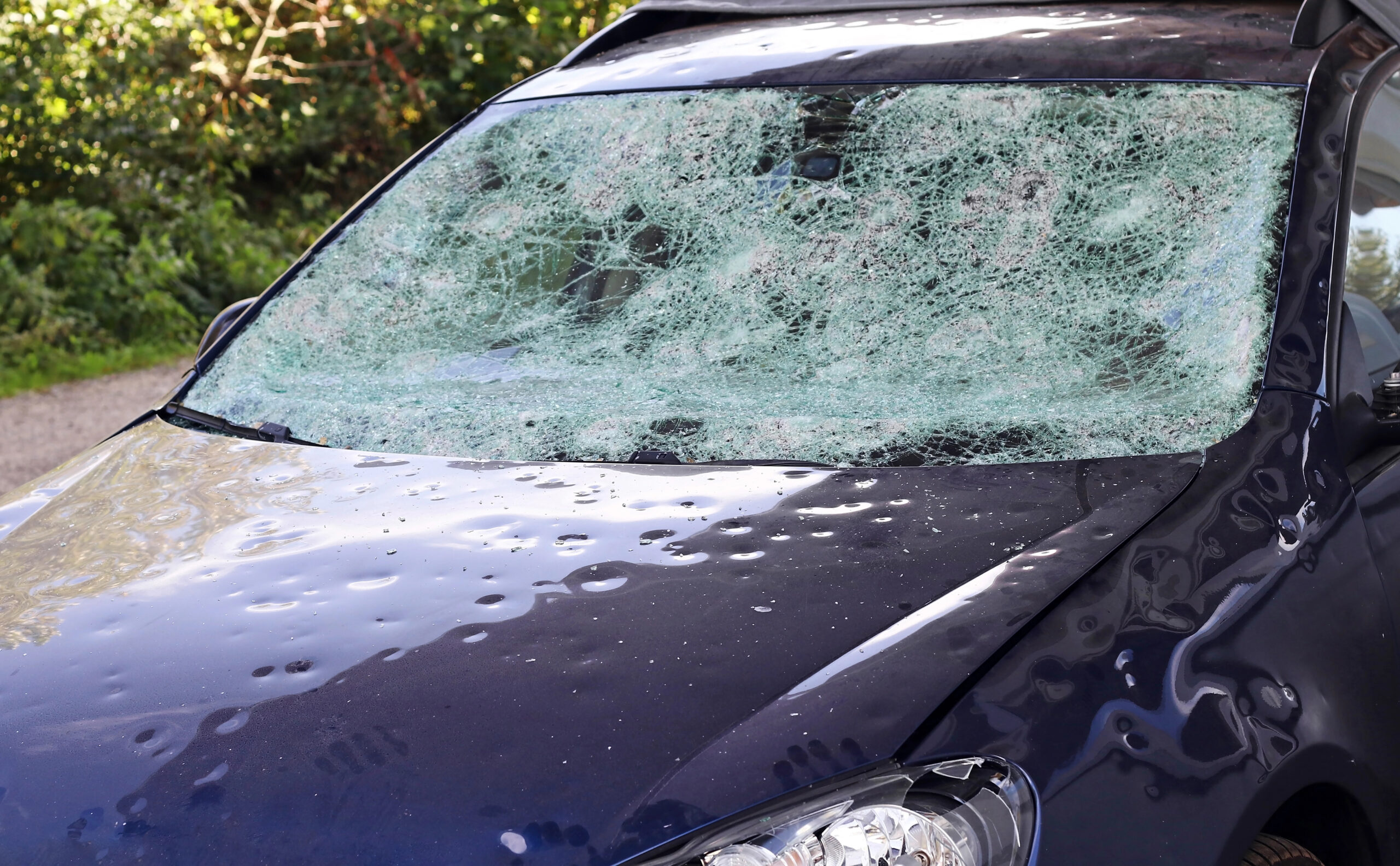
This covers damage from events other than collisions. Hail, falling trees, theft, vandalism, flooding, and animal strikes are all covered under comprehensive. If you live in an area prone to severe weather, this coverage is worth having. We see hail damage repairs regularly at both of our shops. Here is our guide on how to claim hail damage through insurance.
Uninsured and Underinsured Motorist Coverage
This protects you when the other driver has no insurance or not enough to cover your damages. It is optional in Pennsylvania but highly recommended. According to the Insurance Research Council, roughly 1 in 8 drivers nationwide is uninsured.
Rental Car Reimbursement
This covers the cost of a rental car while yours is being repaired. Without it, you are responsible for the rental expense. We have a guide on your options when it comes to rental car insurance that walks through what to look for in this coverage.

What Does No-Fault Insurance Mean in PA?
How Your Insurance Coverage Affects the Repair Process
Understanding your coverage before an accident saves time and stress after one.
When you bring your vehicle to an auto body shop, the first question is always about insurance. What coverage do you have? Is collision included? What is your deductible? Who is the at-fault party?
The answers determine how the repair gets paid for, whether you need to file with your own insurer or the other driver’s, and what your out-of-pocket cost will be.
Here is a common scenario. You are hit by another driver. Their insurance accepts liability. But their property damage limit is only $5,000, and your repair costs $9,000. Their insurer pays $5,000. You are left covering the remaining $4,000 unless you have collision coverage on your own policy to pick up the gap. This is why understanding your coverage before an accident matters so much.
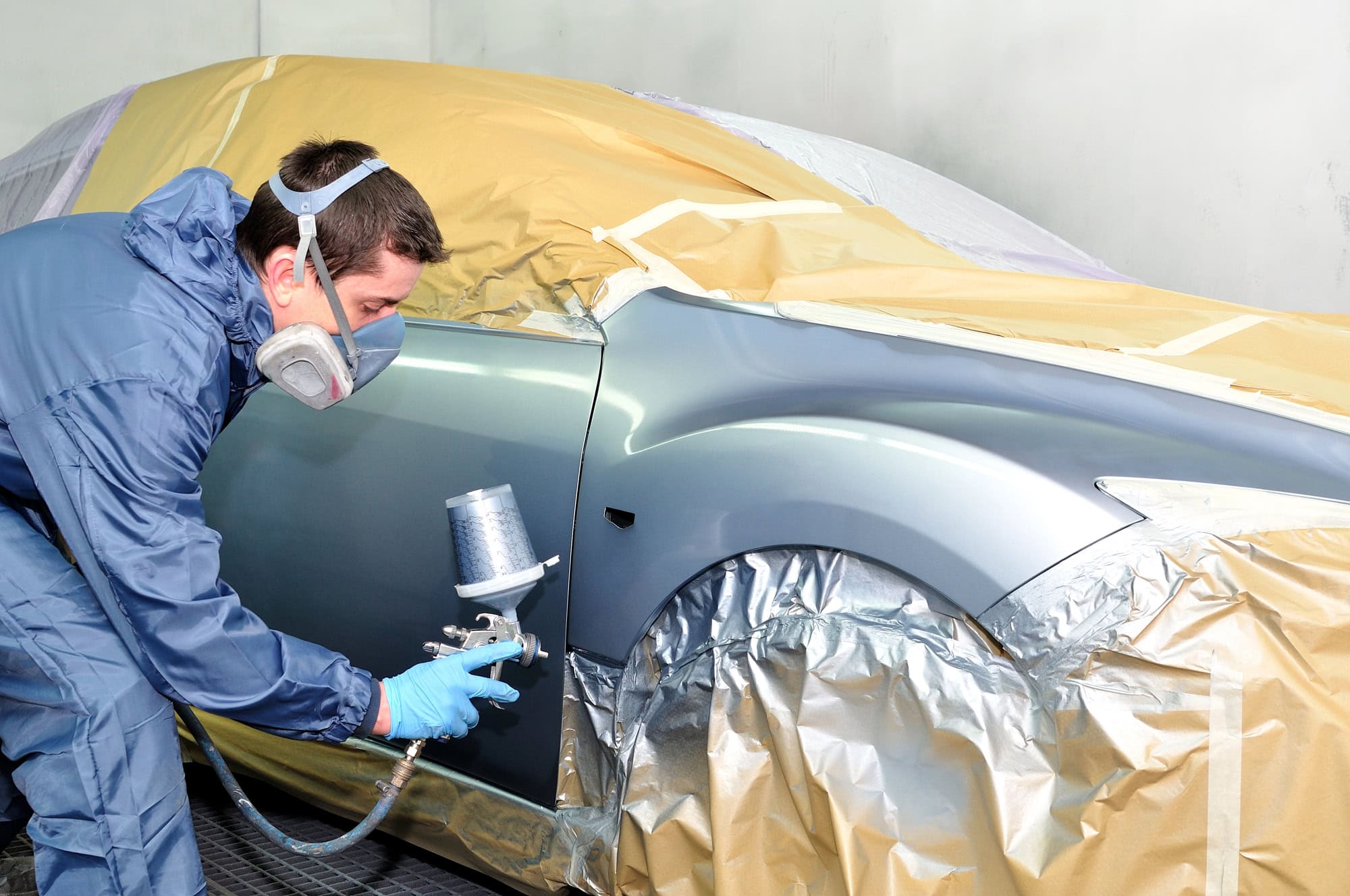
At Badell’s Collision, we handle insurance coordination directly. We work with your insurance company on estimates, approvals, and supplements. We also offer photo estimates so you can start the process before even visiting the shop. If you are unsure how to get your insurer to cover the repair, our guide on how to get insurance to pay for car repair walks through the steps.
Every repair we do comes with a lifetime warranty. Our technicians are I-CAR Gold Class certified. We use factory-quality parts and modern repair technology to make sure the job is done right the first time.
What You Should Do Next
Your insurance policy is not something to set and forget. Review it once a year. Make sure your coverage reflects the value of your vehicle and the level of protection you actually need.
- Check your current coverage. Pull up your declarations page and verify your limits. If you are still at 15/30/5, talk to your agent about increasing them. Also confirm whether you have full tort or limited tort.
- Make sure you have collision and comprehensive. These are the coverages that pay for your vehicle repairs. Without them, an accident or hail storm means paying out of pocket. For more on what to know about your policy, read our car insurance facts guide.
- Save our number before you need it. If you are ever in an accident in Delaware or Chester County, Badell’s Collision is ready to help. We coordinate with your insurance, provide a lifetime warranty on all repairs, and partner with Enterprise Rent-A-Car for your convenience. Call our Aston Location at 610-485-4411 or our Malvern location at 610-296-8444.
FAQs