Key Takeaways
1. Salt targets at chips, scratches, and seams, holding moisture against bare metal so corrosion spreads under the finish.
2. Liquid brine clings, stays damp longer, and reaches crevices a quick rinse never touches.
3. Badell’s Collision repairs corroded panels and refinishes them to factory standards at its Malvern and Aston shops, before damage spreads.
By February, the bottom third of nearly every car in Chester and Delaware counties wears the same gray crust. Whether it is damaging your paint or just making it look bad are separate questions.
Does Road Salt Damage Car Paint?
Road salt does damage car paint, but rarely by attacking an intact finish. Factory paint is a layered system, and cured clear coat holds up well against sodium chloride at winter temperatures.
The trouble starts wherever that system is broken. A chip on the hood, a scuff along a rocker panel, a scratch on a door edge. Each gives salty water a path to bare steel.
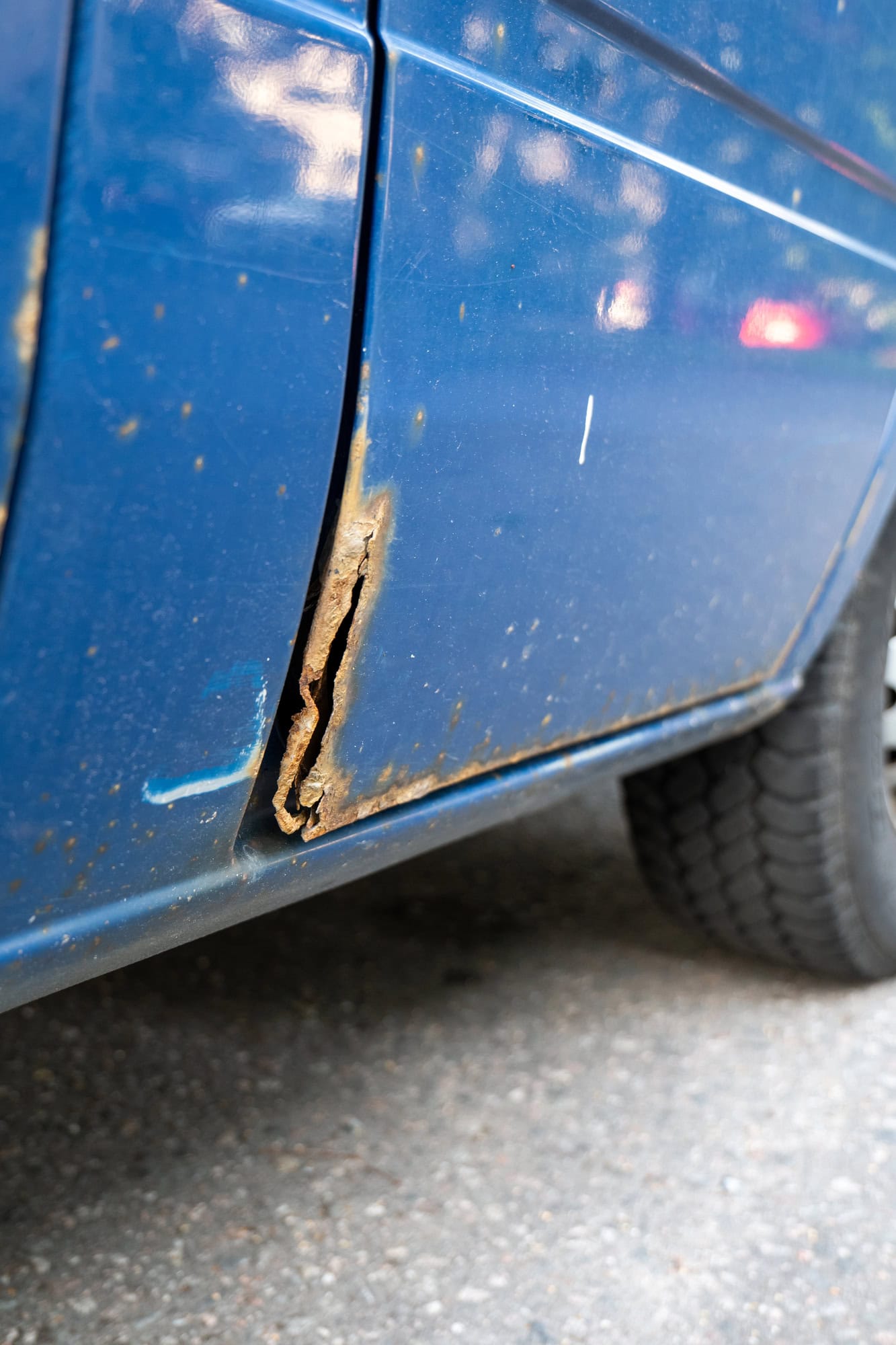
Once salt reaches metal, it keeps the surface wet long after the road dries and turns that moisture into a far better conductor, which is what corrosion needs. The damage travels outward under the film, surfacing as a blister rather than a stain. By the time paint lifts, the metal beneath has rusted a while.
The industry tests for exactly this. In SAE J2334, the cosmetic corrosion standard used to validate automotive coatings, technicians cut a line through the paint before exposing the panel to salt, then measure how far corrosion creeps from the cut. The cut is the point. Paint failure starts at a breach.
Why Is Salt Brine Harder on Car Paint Than Rock Salt?
Contact time is the difference. Rock salt bounces and scatters, while brine wets the surface, wicks into seams, and dries into a residue that pulls moisture from the air on the next damp day.
PennDOT’s anti-icing program sprays a 23 percent salt solution on dry pavement before a storm, so ice cannot bond to the road. Crews run it on U.S. 30 and U.S. 202 near Malvern, and U.S. 322, Route 452, and I-95 near Aston.
That is most of the local commute, and why your car wears salt before snow falls. The District 6 winter guide counted 24,500 tons stockpiled in Chester County last winter.
Federal data shows what that adds up to. When NHTSA closed its investigation into corroded brake pipes, complaint rates in the states it designates as salt states, Pennsylvania included, ran about fifteen times higher than the rest of the country. Part of that analysis came from PennDOT inspection records.

7 Common Car Paint Problems and How to Fix Them Before They Get Worse
Does Snow Damage Car Paint?
Snow by itself does not damage car paint. Clean snow is water, and does nothing a rainstorm would not.
The damage comes from what snow arrives with. Meltwater carries salt onto lower panels, grit in the slush acts like sandpaper at highway speed, and stiff brushes on a dusty hood put scratches where salt wants an opening.
Parking in a warm garage after a salty drive is its own problem. The slush melts, the salt stays, and the metal spends the night wet at a temperature where corrosion moves faster.
Where Does Road Salt Damage Show Up First on a Car?
It starts low, in the places you rarely look:
- Rocker panels and lower door edges, which catch spray off your tires
- Wheel wells and arches, where packed slush sits against seams for days
- The hood’s leading edge and front bumper, which take the most chips
- Door and hatch drain holes, which trap salty water once debris clogs them
- Any chip you meant to deal with, where corrosion begins
Does Road Salt Damage Cars Beyond the Paint?
Yes, and that matters more than the paint. NHTSA found corrosion was rarely confined to one component, showing up across the brake assembly and other underbody parts alike. Its conclusion applies to paint as much as plumbing. The outer coating, investigators wrote, was “the most significant design factor affecting the corrosion resistance.”
Treat a soft brake pedal, a new brake warning light, a loud exhaust, or the smell of fuel around a parked car as urgent, not seasonal. Electric vehicles need extra attention, since battery packs and electronics sit low where spray collects.
How to Protect Your Car’s Paint From Road Salt
The useful steps are unglamorous. Before winter, wash the vehicle, apply fresh wax or sealant, and touch up any chip that exposes bare metal. Of the three, the chip repair matters most.
Protection products are where drivers overspend. What each buys:
| Option | What it does | Roughly how long it holds up | What it will not do |
|---|---|---|---|
| Carnauba or synthetic wax | Adds a sacrificial layer so salty water beads and rinses off | Weeks to a couple of months in winter | Protect paint that is already chipped |
| Paint sealant | Bonds to the clear coat for a slicker, longer lasting barrier than wax | Most of a season with regular washing | Seal a scratch or stop rust that has started |
| Ceramic coating | Cross-links with the clear coat, making the surface far easier to clean | Years, applied professionally and maintained | Stop stone chips, being a coating and not a cushion |
| Paint protection film | A thick urethane layer absorbing stone chips on high impact panels | Years, and usually warrantied | Cover a whole vehicle at a sensible cost |
| Touch-up paint on chips | Closes the opening salt uses to reach bare metal | Until the next chip | Reverse corrosion already under the finish |
How Often Should You Wash Your Car in Winter to Remove Road Salt?
Federal safety regulators urge drivers in salt states to wash undercarriages through winter and again in spring. Choose a wash with an underbody spray, and rinse loose salt off first so grit is not dragged across the paint.
Skip the dish detergent, which strips whatever wax you applied in fall. Give the car one last cleaning in spring, since leftover deposits keep working year round.
Wash on a day above freezing when you can dry door seals and jambs, or you trade a rust problem for a frozen lock.
Does Car Insurance Cover Rust and Road Salt Damage?
Almost never. Standard policies treat rust and corrosion as wear and tear, so gradual salt damage is excluded even on full coverage. Comprehensive exists for sudden events instead, a distinction worth understanding before a storm forces the question.
- Comprehensive versus collision coverage decides which winter incidents are covered at all. Comprehensive handles non-crash events like a limb falling in an ice storm, collision handles the guardrail you slid into, corrosion neither.
- Hail claims are the closest cousin to winter storm damage, and raise the same question every time. If a repair costs about what your deductible costs, filing gains nothing.
- Common coverage myths are worth correcting early. Comprehensive pays your car’s value at the time of loss, not what you paid, and the state minimum protects less than drivers assume.
- Getting an insurer to pay comes down to documentation and an independent estimate. No policy pays for maintenance or wear, the category rust falls into.
Check your factory warranty too. Most rust-through coverage runs five years or more, but pays for perforation, not corrosion that began at a chip left alone.
How Badell’s Collision Repairs Road Salt Damage in Malvern and Aston
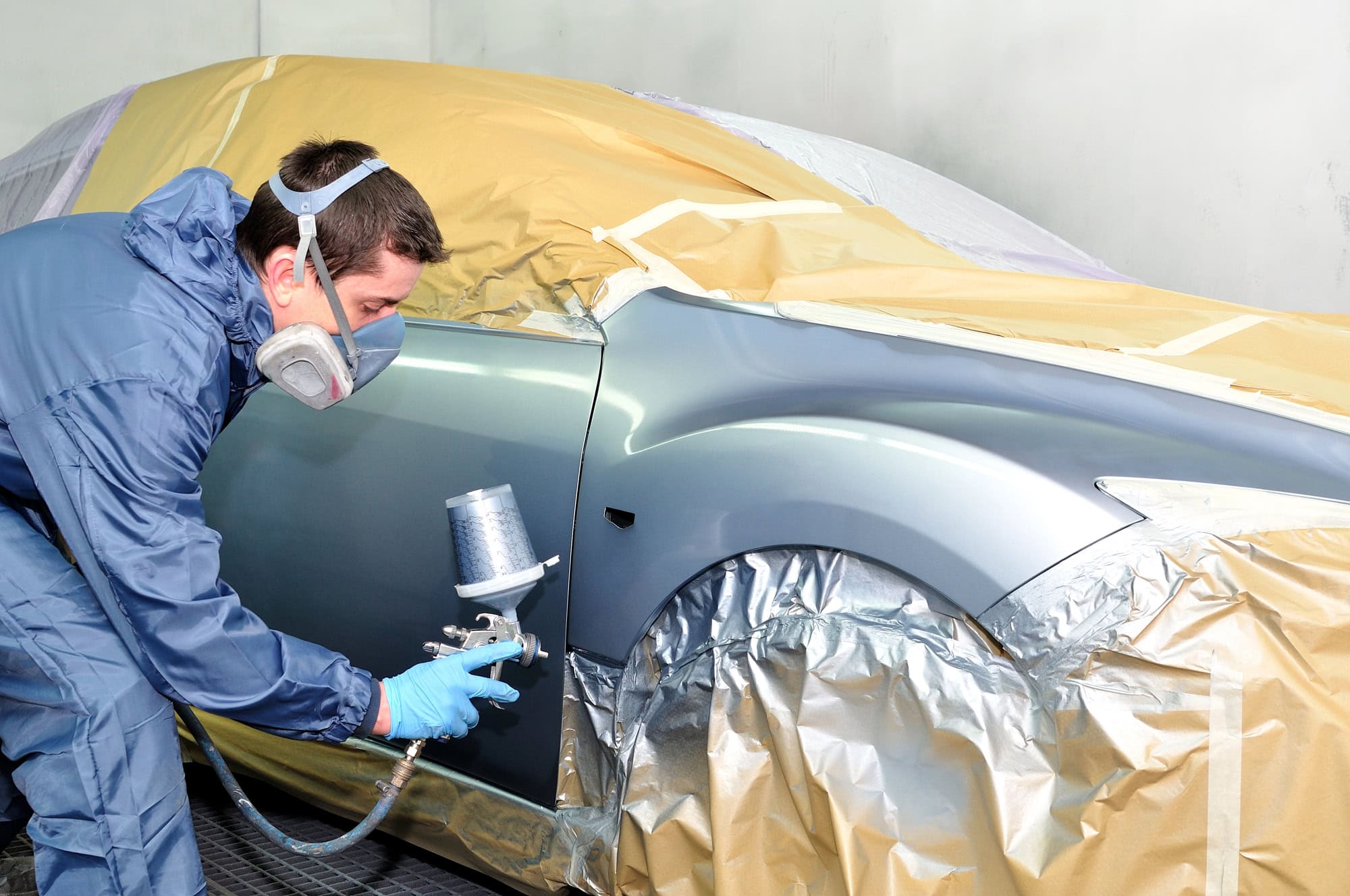
Salt damage is a refinishing problem more than a body problem. Corroded metal must be cut back to sound material, treated, then refinished so it does not read as a patch in sunlight.
That is daily work at Badell’s Collision. The team is I-CAR Gold Class trained, repairs carry a lifetime warranty, and car painting and refinishing uses digital color matching so a repaired rocker panel blends with those around it.
Plan for the car to stay a while. Cutting, welding, and refinishing need cure time, so rust work runs longer than a bumper swap. Whether you get a loaner depends on rental reimbursement coverage, and our breakdown of rental car insurance options explains what pays.
What You Should Do Next
Salt damage is cheapest to fix before it spreads under the paint. Where to start:
- Walk around the car this week, before the first anti-icing truck goes out. Look low, along the rocker panels and behind the wheels, and run a hand over the lower doors for grit.
- Seal any chip that reaches bare metal, and photograph anything worse. A bubble or brown edge lifting the paint means corrosion is already working underneath, and will not stop on its own. Photos document it, but as our look at photo estimates explains, they cannot replace an in-person inspection. The blister you see is always smaller than the damage beneath it.
- Get a free estimate at the Malvern or Aston shop. Badell’s Collision will tell you honestly whether the panel needs work now or watching till spring, and refinishing happens in house so the repair blends.
Frequently Asked Questions